Get to Know the Group
Students
PhD Student
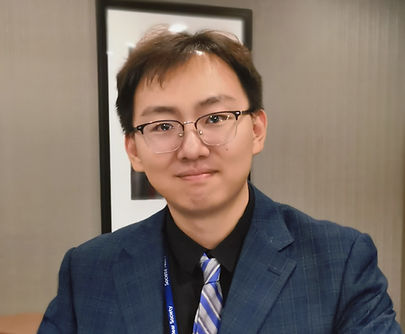
Zheng Lu
Zheng Lu is a PhD candidate in Engineering Physics at McMaster University. His research examines how pressure tube deformation affects coolant flow, fuel temperatures, and pressure tube wall temperatures in CANDU reactor channels. He combines computational fluid dynamics (CFD) simulations using STAR-CCM+ with Magnetic Resonance Velocimetry (MRV) experiments to study coolant bypass phenomena in aged CANDU fuel channels.
Before joining McMaster, Zheng completed his Master of Applied Science and Bachelor of Engineering degrees in Nuclear Engineering at Ontario Tech University. His earlier work focused on CFD modeling of CANDU fuel bundles.
Zheng has served as a teaching assistant for several undergraduate courses and as a reviewer for journals such as Nuclear Engineering and Technology and Nuclear Engineering and Design.
PhD Student
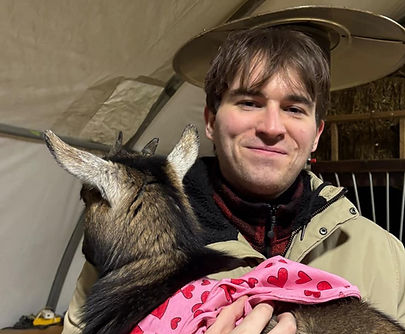
Morgan Collins
Morgan is currently an Engineering Physics PhD candidate, and has been with the group since 2021, starting as an M.Eng student. He holds a B.Eng (2021) and MASc (2023) in Nuclear Engineering from Ontario Tech University.
His research supports the Thermodynamics of Advanced Fuels - International Database (TAF-ID), an international collaboration developing a database used to perform thermodynamics calculations of nuclear fuel related materials. Experiments are focused on the characterization of representative corium (U-Pu), and the thermodynamics of both Plutonium, and Uranium-noble metal systems critical for severe accident analyses and fission fuels.
Previous work includes oxidation of metals (Cu-alloys and Zircaloy-4), molten salt thermodynamics, nuclear forensics, and materials characterization
PhD Student
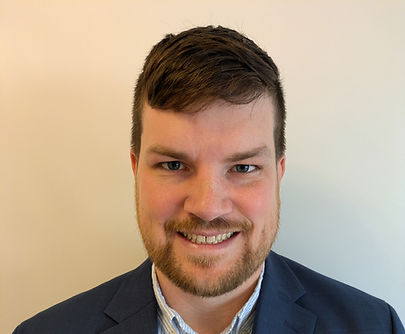
Aaron Barry
Aaron is a part-time PhD student in Nuclear Engineering at Ontario Tech. His thesis focuses on creating a simulation tool for predicting radionuclide release during spent fuel conditioning, a waste management option to render spent fuel suitable for disposal in a Deep Geological Repository. The tool Radionuclide Release from Research Reactor Fuel Conditioning (4RFC) predicts the radionuclide inventory present in the fuel of interest, predicts the chemical form of the radionuclides under the prevailing conditioning parameters, predicts the transport of radionuclides under these conditions over time, and integrates these three prediction capabilities into a single tool, with a Graphical User Interface (GUI), to predict the radionuclide release during conditioning of research reactor fuel.
Aaron lives in Vienna, Austria and works at the International Atomic Energy Agency. He previously worked at Canadian Nuclear Laboratories in Chalk River. He has an undergraduate degree in Chemistry and a master’s degree in Nuclear, both from the Royal Military College of Canada. He is a licensed Professional Engineer in the province of Ontario. He enjoys the sport of curling and woodworking in his spare time.
PhD Student
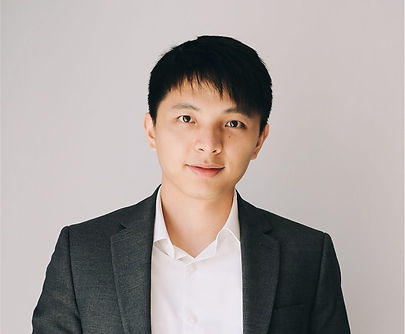
Rong Guo
Rong Guo studies neutron-induced damage in reactor materials, with a particular focus on high-temperature structural materials for Small Modular Reactors (SMRs). His work involves designing and implementing temperature controlled instrumentation for neutron irradiation experiments at the McMaster Nuclear Reactor. Rong also performs thermal hydraulic modeling to analyze the temperature profile of irradiation sites, supporting the optimization of experimental conditions and reactor safety.
MASc Student
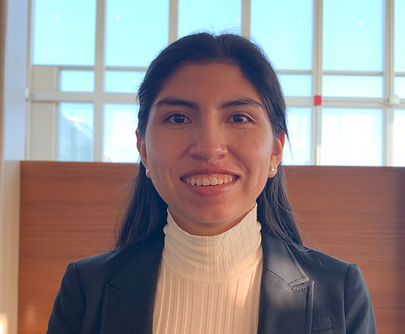
Luisa Vargas Suarez
Luisa Vargas Suarez is a Master of Applied Science student in Engineering Physics at McMaster University, supervised by Dr. Markus Piro. Her research focuses on advancing computational modeling for Molten Salt Reactors (MSRs), specifically coupling Thermochimica with phase-field models in MOOSE to predict corrosion behavior and microstructural evolution in complex salt systems. She is currently collaborating with researchers at Idaho National Laboratory (INL), where she spent the summer working with the Computational Mechanics and Materials group on the Thermochimica–MOOSE integration for phase-field simulations.
Before joining McMaster, Luisa completed her B.Sc. in Energy Science at the University of Calgary, where she worked with Dr. Jason Donev on nuclear education and computational outreach projects. Her work included developing interactive simulations and web-based learning tools that have reached global audiences through the PhET Interactive Simulations project.
MASc Student
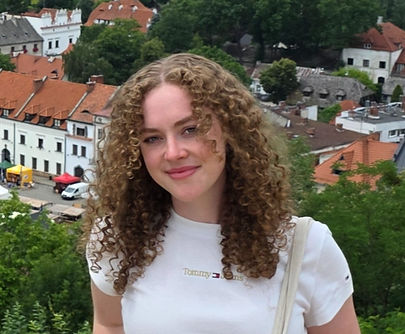
Hadleigh Bluhm
Hadleigh Bluhm is a a graduate student pursuing a Master of Applied Science in Engineering Physics at McMaster University. Her research focuses on investigating lead-free alternatives for radiation shielding in X-ray computed tomography. She aims to identify a suitable material to replace lead in X-ray shielding applications and experimentally characterize its properties. Her project is being done in collaboration with Zeiss.
Prior to joining McMaster, Hadleigh completed her Bachelor of Science in astrophysics at the University of Calgary. Her undergraduate honours thesis research focused on characterizing the dark current in the CMOS detector being used in the CASTOR mission. Hadleigh's work was conducted in the University of Calgary's Vacuum Ultraviolet Laboratory.
Hadleigh also spent a large portion of her undergraduate degree dedicated to scientific outreach at UofC's Rothney Astrophysical Observatory, where she interned, volunteered, and eventually coordinated volunteers for outreach events.

MASc Student
Patrick Duggan
Patrick is currently a graduate student at McMaster University focusing on used research reactor fuel disposal. He graduated from University of Ontario Institute of Technology with a bachelors degree in Nuclear Engineering.
MEng Student
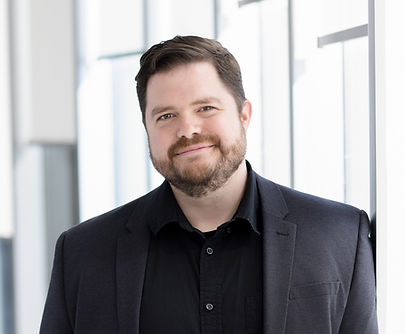
Lowell Bower
Lowell Bower is a part-time graduate student pursuing an MEng degree with graduate research project in Nuclear Engineering. His project is to create a computational fluid dynamics model of a molten salt reactor to examine behaviour of gaseous fission products within the core. Lowell’s full time work is as an Engineering Manager for Ontario Power Generation’s New Nuclear team.
Research Assistant
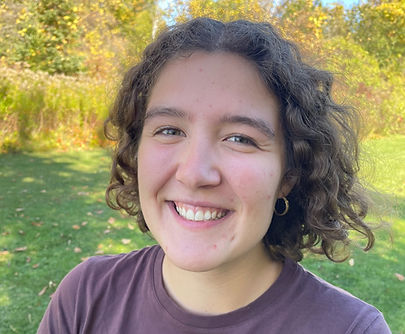
Kaylee Rich
Kaylee Rich is a fourth-year chemistry student completing an undergraduate thesis project in Markus’ research group. Her project focuses on the oxidation of Zircaloy-4 fuel sheath under steam and combined steam/air conditions. This research will provide valuable insight into the behaviour of Zircaloy-4 in CANDU reactors during loss-of-coolant accident conditions. While prior research has examined the oxidation of Zircaloy-4 under steam and air conditions independently, there remains a gap in the literature regarding combined steam/air environments.
Kaylee has previously completed a co-op at Canadian Nuclear Laboratories as a materials science student. In this role, she developed an in-house method to qualify the density of TRISO fuel particles. TRISO is an advanced reactor fuel form used in high-temperature gas reactors. Maintaining rigorous qualification standards for nuclear fuel is essential to ensuring reactor safety. Kaylee also explored the use of spark plasma sintering as a method for compact fabrication, including determining the optimal fabrication parameters.

Research Assistant
Evan Fletcher
Evan Fletcher is an undergraduate student in his second year of Engineering at McMaster University, studying Materials Science and Engineering, and pursuing a minor in Nuclear Engineering. He is fascinated by the unique applications of nuclear science, especially its importance and application to the energy industry.
Evan is a recipient of the Engineering Research Experience Award, which lead him to join the Nuclear Fuels and Materials research group in May 2025 as a co-op student under Dr. Markus Piro. Evan is currently conducting research part-time alongside his undergraduate studies. During his time in the group he has contributed to several projects on the development of Nuclear Materials. Evan has operated a Netzsch STA-449 F1 Jupiter for Thermogravimetric Analysis (TGA) measurements of CuCrZr alloys for fusion applications as well as Zry-4 CANDU fuel tubes under accident conditions. He has also completed Differential Scanning Calorimetry (DSC) measurements of surrogate Corium for the OECD-NEA TCOFF project. More recently, Evan has been focusing on X-Ray Computed Tomography (XCT) scanning of both surrogate and fresh McMaster Nuclear Reactor fuel assemblies.
When Evan is not studying or doing research, he likes to keep busy with sports. Evan spends his free time running, playing basketball, and tossing a frisbee around!


PhD Student
Alec Fernback
Alec Fernback is a Ph.D. student supervised by Dr. Markus Piro in Engineering Physics and Dr. André Phillion in Materials Engineering at McMaster University. Partnered with Canadian Nuclear Labs (CNL), his research focuses on characterizing the temperature-dependent meso/micro-scale structural and mechanical property evolution of unirradiated surrogate TRISO particles. He combines high temperature nanoindentation with a novel approach of in-situ 3D X-ray computed tomography (XCT) imaging under applied thermal and compressive loading. This work aims to advance CNL’s TRISO characterization capabilities; as well as provide new insights into the internal structural and damage evolution of unirradiated TRISO, providing a pure thermal response baseline.
Originally starting as a M.A.Sc. student, Alec successfully completed the proposal and transfer exam to move into the Ph.D. program and continue his project. Prior to graduate studies, he completed his Bachelors of Materials Engineering & Society (B.Eng.Soc.) at McMaster University. His senior year capstone supervised by Dr. André Phillion focused on characterizing structural changes of laser powder bed fusion (LPBF) printed Al-6061 with manufacturing parameters through 3D XCT imaging.

Part-time MASc Student
Elena Jolovic
Elena Jolovic is an Engineering Physics graduate from McMaster University and a part-time MASc student in Engineering Physics, where her research focuses on neutronics and nuclear fuel engineering. Her work explores alternative TRISO fuel concepts and aims to connect reactor physics performance with practical considerations for fuel design and deployment. She has used reactor physics codes such as MCNP and OpenMC to investigate reactor behaviour and assess the effects of different design parameters. She also contributed to research examining the potential deployment of microreactors in Nunavut.
Elena is currently a Nuclear Engineering Trainee at Hatch, where her work has expanded across the nuclear fuel cycle and advanced reactor deployment. She has supported studies examining fuel supply and security, radioactive waste management, reactor technology selection, and the feasibility of deploying SMRs and microreactors in different applications.
Elena is the lead author of a peer-reviewed paper published in Nuclear Technology on extending the core lifetime of the Canadian Thermal Battery™ microreactor. She was recognized as an NEA Rising Star in 2023 and is an NEA NEST Fellow. She is also a member of the Canadian Nuclear Society and has participated in the NEA NextGen Nuclear Leaders Summer School.

Visiting Researcher
Brock Nowak
Brock Nowak is a PhD candidate visiting from Queen's University and has been with the group since April 2026. He is co-supervised by Dr. Suraj Persaud, the UNENE Research Chair in Corrosion Control and Materials Performance in Nuclear Power Systems, and Dr. Zhongwen Yao. Brock holds a BASc in Mechanical and Materials Engineering from Queen's University.
He is a guest researcher at McMaster University under the NSERC CREATE-CORRECT program, contributing to the development of Accident Tolerant Fuels (ATFs). His work focuses on the high-temperature steam oxidation of chromium-coated zirconium alloys for implementation in CANDU reactors, aiming to enhance cladding performance and reactor safety margins while minimizing the associated neutronics penalty.
Brock’s expertise covers coating fabrication via magnetron sputtering, high-temperature aqueous (static autoclave) and gaseous corrosion techniques (TGA, DC-MS), and materials characterization (SEM, EDS, and XRD) for the study of surface coatings and oxidation behavior in nuclear-grade zirconium alloys.
Previous work includes international collaboration through the OECD-NEA NEST TCOFF-II fellowship, including experimental testing under the supervision of Dr. Martin Steinbrück within the High-Temperature Materials Chemistry and QUENCH research groups at the Institute for Applied Materials – Applied Materials Physics (IAM-AWP), Karlsruhe Institute of Technology (KIT).

Postdoctoral Researcher
Dr. Joshua Findlay
Dr. Joshua Findlay is a Postdoctoral Researcher in the Department of Engineering Physics at McMaster University. His research focuses on the chemistry, thermodynamics, phase behaviour, and thermophysical properties of nuclear reactor materials and fuel systems. By combining computational modelling with rigorous experimental validation, he seeks to advance understanding of high-temperature chemical processes, transport phenomena, and material interactions under reactor-relevant conditions.
Dr. Findlay completed his PhD in nuclear chemical engineering at Lancaster University in England, where he developed integrated modelling and experimental approaches to investigate alternative fuels for molten salt reactors. During his doctoral studies, he spent a year in Montréal at the Centre for Research in Computational Thermochemistry (CRCT) under the mentorship of Patrice Chartrand, co-founder of FactSage. There, he further developed expertise in computational thermodynamics while contributing consulting support to advanced reactor developer Terrestrial Energy.
He also holds an MSc in Sustainable Power Systems Engineering and a BEng in Chemical Engineering from University of Strathclyde in Scotland. At McMaster, his research supports CANDU, pressurized water reactor (PWR), and boiling water reactor (BWR) technologies, contributing to the development of safe, efficient, and sustainable nuclear energy systems.

Summer Student
Harjit Singh
Harjit Singh is an Engineering Physics student at McMaster University pursuing a Nuclear Minor. Originally from Ottawa, Ontario, he completed an Electro-Mechanical Engineering diploma at Algonquin College and worked at Siemens Healthineers for approximately five years. He is excited to join the group this summer and contribute to research in MRI-Compatible Materials for High-Reynolds Magnetic Resonance Velocimetry in CANDU Fuel-Channel Experiments.

PhD Student
Becca Barbera
Becca Barbera is a PhD Candidate in Engineering Physics at McMaster University, where she also earned her Bachelor of Engineering degree in 2026. Her research focuses on experimental studies aimed at better understanding fission product behaviour in irradiated nuclear fuel. Her work includes investigating the thermodynamic properties of perovskites, and fission product retention in U3O8 under severe accident conditions.

PhD Student
Zachary Demers
Zack is currently a part-time PhD candidate in Engineering Physics at McMaster University, supervised by Dr. Markus Piro and Dr. Eleodor Nichita. His research focuses on improving the understanding and modelling of delayed-neutron parameters in CANDU reactors. Zack brings a decade of experience in the Canadian nuclear industry, having worked with Candu Energy Inc. (AtkinsRéalis), Kinectrics, Laurentis Energy Partners, and McMaster University. His professional experience includes reactor physics, radiation physics, shielding, activation analysis, and nuclear safety applications.
Admin
.jpg)
Administrative Assistant
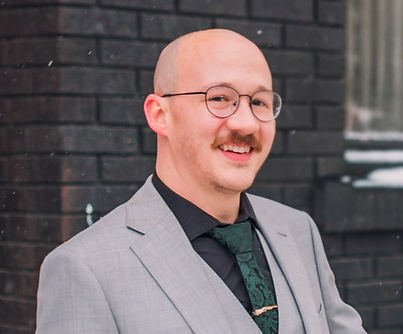
Joshua Chiasson
Josh Chiasson is a dedicated administrative professional based in Hamilton, Ontario, with experience supporting high-stakes operations in specialized environments. In his role as an Administrative Assistant for the Nuclear Operations & Facilities team—working closely with Dr. David Novog and Dr. Markus Piro at McMaster University—he applies strong organizational skills, precise documentation practices, and clear communication to keep complex processes running efficiently and reliably.
Josh’s background includes formal training in Office Administration from Mohawk College, where he developed a strong foundation in administrative systems, workflow management, and professional communication. He is recognized for his calm, steady presence, his ability to anticipate team needs, and his commitment to maintaining structure in demanding technical settings. Driven by continuous improvement and a genuine curiosity for the work he supports, Josh is a valued contributor to the department’s overall effectiveness and success.